


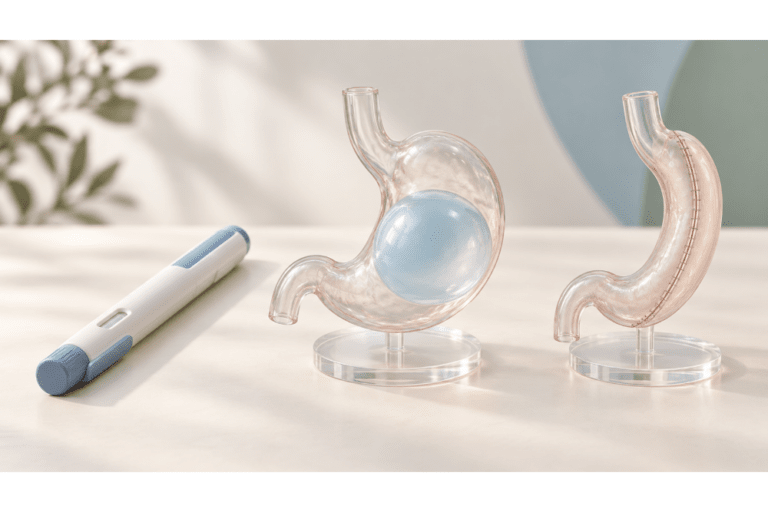

Choosing a weight-loss treatment goes hand in hand with thinking beyond the first few months. You may want to avoid surgery, prefer a treatment with a clear end date, or seek longer-term support after repeated weight regain. Understanding what every possibility brings is a useful place to start.
Gastric Balloon vs GLP-1 vs Gastric Sleeve
GLP-1 medication usually involves gradual dose increases and often long-term treatment. A gastric balloon provides temporary support for smaller meals through a placement procedure. Gastric sleeve surgery permanently reduces stomach size and affects appetite signals in one operation. The procedures offer a more defined starting point: balloon support begins after placement, and sleeve changes take effect after surgery. Weight loss still develops over months; neither guarantees faster results than medication. All three require follow-up and changes to eating habits. [2] [4] [5]
What Happens to Your Weight After Stopping GLP-1?
Weight regain is common after stopping GLP-1 medication, although the amount varies. Plan any change with your prescribing doctor. [1]
The STEP 1 follow-up study found that weight often returned after GLP-1 treatment ended. Within a year, participants had regained an average of two-thirds of the weight they had lost. Structured lifestyle support also ended. This was a group average, not a prediction for everyone. Weight regain is a reason to review treatment, not blame yourself. [1]
How Can a Gastric Balloon Support Long-Term Weight Loss?
A gastric balloon can help you lose weight without surgery while practicing smaller portions and sustainable eating habits. The aim is to build routines that support your progress after removal, with continued nutritional guidance. Results vary, so follow-up remains important. [2]
In Prague, Royal Medical offers balloon treatment from €2,050, with specialists including very known and popular gastroenterologist Dr Jan Král. Read our interview with Dr Jan Král to explore the approach. Your final price and treatment plan are confirmed individually.
Why Can Gastric Sleeve Surgery Have Longer-Lasting Results?
The anatomical changes from gastric sleeve surgery remain after recovery. For suitable patients with obesity, surgery may offer a more durable approach when other treatments have not provided lasting improvement. [4] Even here is the most important to gain also the new habits of a healthy lifestyle.
In the 10-year SLEEVEPASS trial, average BMI fell from about 47 to about 38. Patients still regained a median of 35% of their maximum weight loss, and 15.7% needed another operation, mostly for reflux. This study did not compare surgery with modern GLP-1 medicines. Surgery still requires lifelong follow-up, and weight regain remains possible. [3]
| Criteria to compare | GLP-1 medication | Gastric balloon | Gastric sleeve |
| Treatment simplicity | Regular medication | Endoscopic or swallowable placement | Surgery under general anaesthesia |
| Visible results | Gradual loss over months | Progress over the first months of a defined programme | Loss develops over months, often substantial in the first year |
| Lasting results | Often needs ongoing treatment. Regain is common after stopping | Lasting results are possible with sustained habits and follow-up | Permanent stomach changes. Long-term loss is possible, but regain can occur |
| Price | Recurring cost. Varies by type, dose and country | From €2,050 at RM | From €6,550 at RM |
| Access | Prescription and medical eligibility | Available through RM after assessment | Available through RM after surgical assessment |
| Ongoing commitment | Regular dosing, reviews and lifestyle changes | Nutrition support, removal visit for endoscopic balloons | Recovery, staged diet, supplements and lifelong follow-up |
| Key risks | Nausea, vomiting and bowel changes. | Nausea, sometimes early removal, rare serious complications | Bleeding, leaks, reflux and nutrient deficiencies |
Gastric Balloon vs GLP-1 vs Gastric Sleeve at a Glance
Results vary: no method guarantees a date for visible change. All require lifestyle support. Prices checked 26 October 2026; RM confirms your individual quote. Clinical overview: [2] [4] [5] [6].
Choosing Weight-Loss Treatment: Risks and Aftercare
As no procedure is without a risk, also non of this three described methods aren’t without any risk. We can say, that all can bear some kind of difficulties. Medication can cause nausea and digestive symptoms. Balloons may cause vomiting or pain and rarely need early removal. Surgery carries operative risks, including bleeding and leaks, and requires nutritional monitoring. It’s necessary you to understand all what is connected with the selected treatment. Your doctor should explain the risks specific to you, do not hesitate to ask.
It is also important to ask about ongoing costs, follow-up and what happens if weight returns. If travelling for treatment, agree on aftercare at home and any return visits before booking.
Royal Medical coordinates gastric balloon and gastric sleeve treatment in the Czech Republic. Discuss medication with your prescribing doctor. Contact Royal Medical to discuss a specialist consultation and a plan tailored to your health.
Gastric Balloon, GLP-1 and Gastric Sleeve FAQ
Is a gastric balloon permanent? No. The balloon is temporary; eating habits and follow-up help support results after removal. [2]
Is gastric sleeve always better than GLP-1 medication? No. Suitability depends on your health, treatment history and preferences. A permanent anatomical change does not guarantee permanent weight loss. [4]
General information only. Treatment requires individual medical assessment.
Sources
[1] STEP 1 extension • [2] AGA guidance • [3] SLEEVEPASS
[4] NIDDK surgical guidance • [5] EMA semaglutide information • [6] NIDDK risks